- Free score and mirror images
- No account needed
- No photo upload
Face Symmetry Test
See how closely the two halves of your face match, and what your face looks like built from each half alone. Nothing is uploaded, because the measuring happens on your device.
Upload a photo
Drag and drop, or choose a file
JPG, PNG, WebP or HEIC
Your photo never leaves your device
- Nose pointed at the camera
- Even light on both cheeks
- Relaxed face, lips together
- Glasses off, hair behind ears
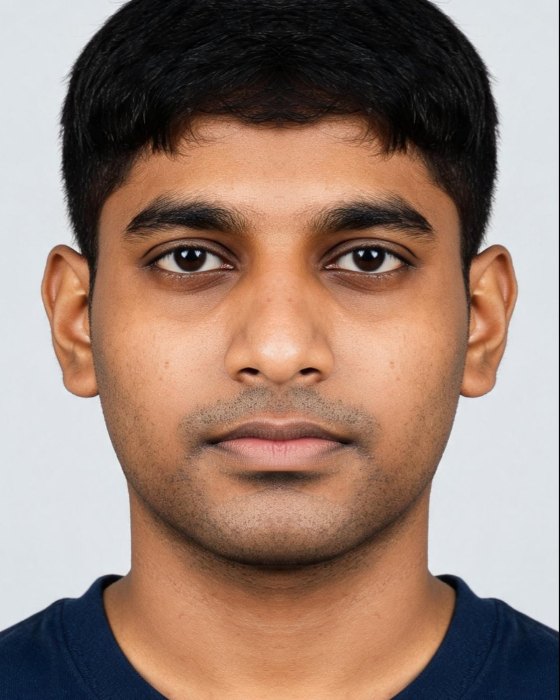
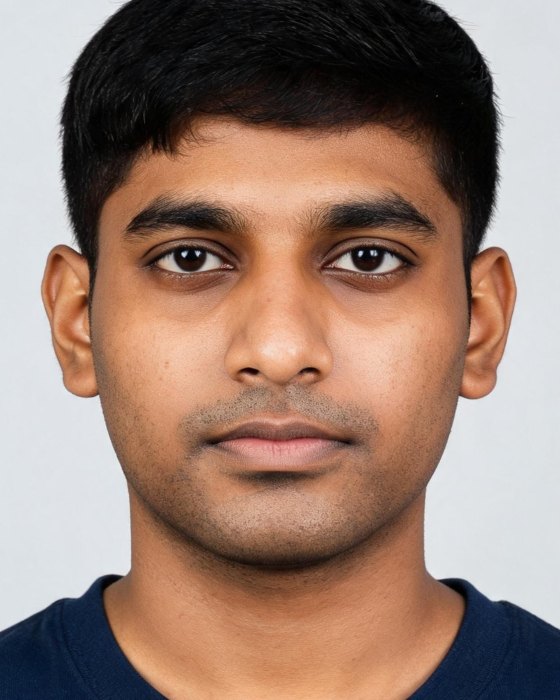
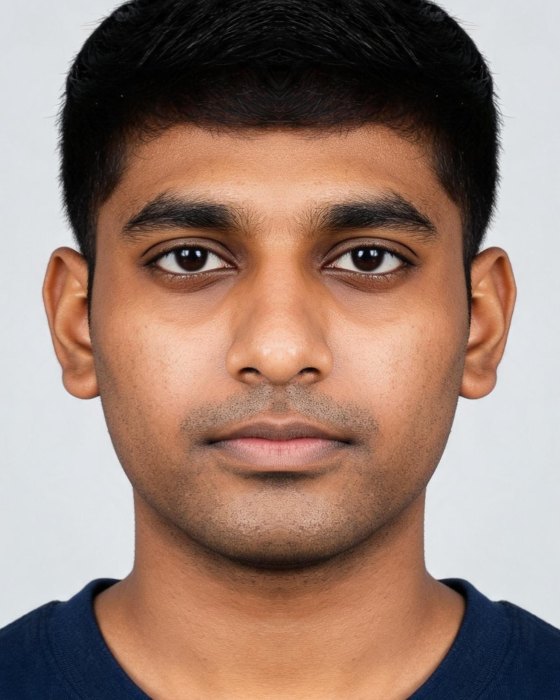
What you get
Start with the free result. Upgrade only if you want the full picture.
Symmetry Deep Dive
$3.99 once- A heatmap of all 468 points on your face
- Findings in plain English, such as which eye sits higher or which way the nose tip leans
- Mouth-corner height, jaw fullness and chin direction, where they differ
- Which side of your face to favor in photos
- Both mirrored faces in HD, with no watermark, to download
Get your free result first, then upgrade from the result page.
How it works
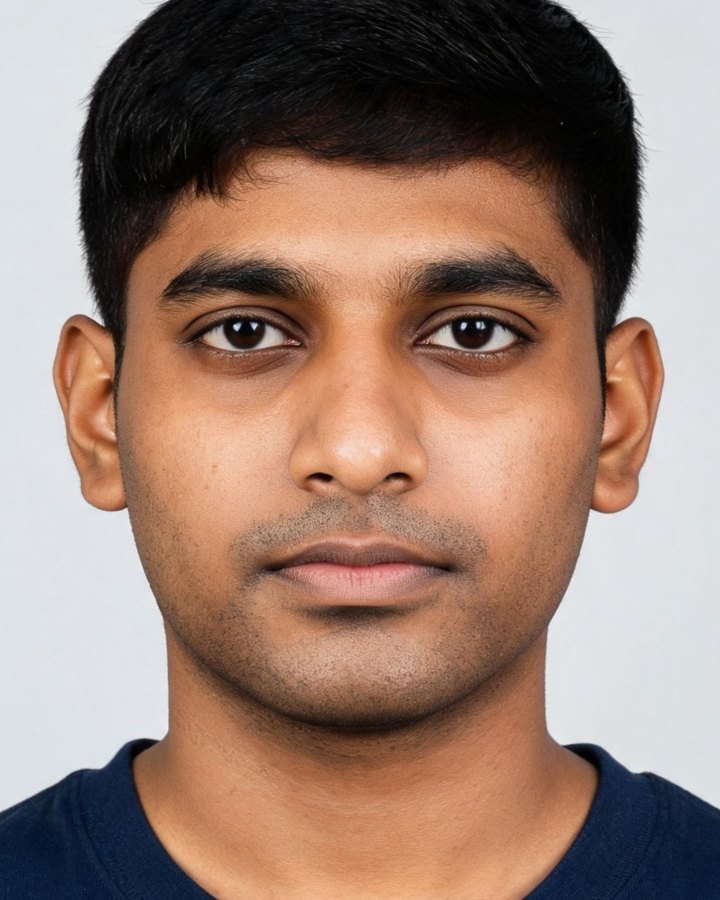
Pick a photo taken straight on
Point your nose at the lens and keep your chin level. If you can, ask someone else to take it.
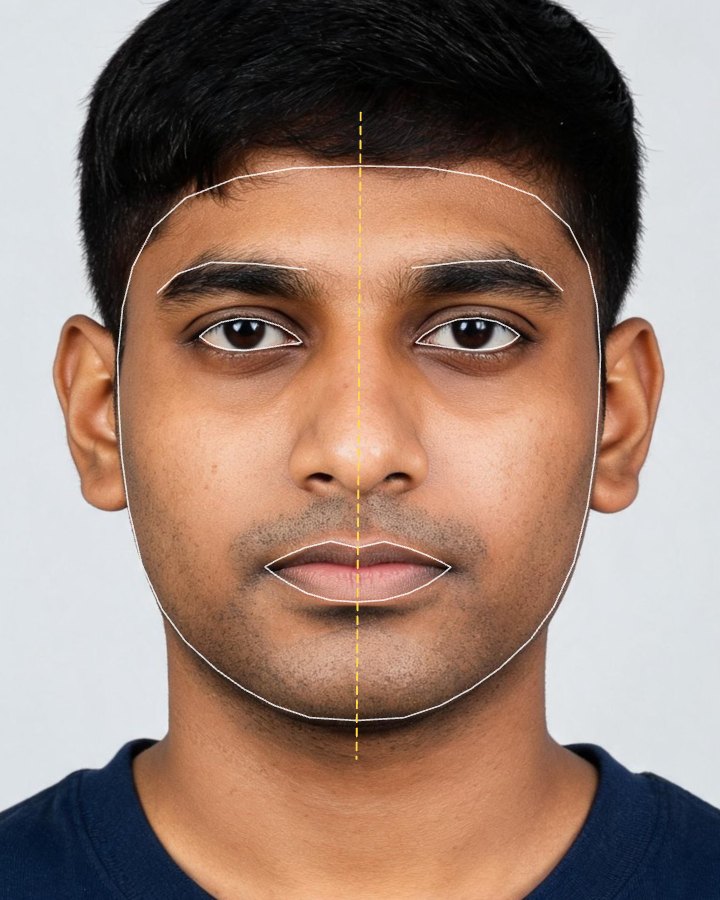
Points matched across your face
Each of 468 points is paired with its partner on the opposite side, and a center line is fitted through the pairs.
Left + leftRight + rightCompare your two sides
Your free result has a score out of 100, a score for each of six regions, and two faces built from mirrored halves.
Taking the photo
Small problems with a photo almost always land on one side of the face, so they feed straight into this score.
Camera
Put the camera at eye height, about 5 feet from your face. Ask someone to hold it, or stand the phone against something at eye height and set the self-timer. Close up, the lens enlarges whatever is nearest, and a slight turn of the head grows into a visible difference between your sides. Point your nose straight at the lens. Past a 6° turn we show a warning, and past 20° we don't score the photo.
Light
Stand facing a window so daylight reaches both cheeks equally. Light from one side leaves the other side in shadow, and the model places points less precisely there.
Face
Relax your mouth and forehead. Few people smile evenly, and a raised brow usually rises more on one side, so we flag smiles and open mouths. Take off glasses. Put your hair behind both ears, or part it so it falls the same way on each side.
A head tipped toward one shoulder is fine, since the center line is fitted to your face. Tipping your chin up or down changes the vertical spacing of your features, so keep it level. In a group photo we score the largest face.
How the score is measured
The score compares each point on one side of your face with its partner on the other. MediaPipe's face model gives us 468 mesh points for this. Its other 10 points sit on the irises and aren't used. The pairs come from MediaPipe's standard face mesh: the left mouth corner goes with the right mouth corner, one end of the jaw with the other. A few points sit on the midline, such as the tip of the nose, and are their own partner.
Next we find the line your face is symmetric around. We take the halfway point of every pair and draw the straight line that best fits all of them, a least-squares fit. Because the line comes from your face, a head tipped to one side or sitting off-center in the frame doesn't lower the score.
Each pair is then checked against that line. One point is reflected across it, and the distance to its partner is the error, split evenly between the two points. Midline points are checked by their distance from the line. Every distance is a percentage of face width, so the size of your face in the frame doesn't matter.
The average across all 468 points is your deviation. The score is 100 − 12 × deviation^0.85, which turns 0.5% into 93 and 2% into 78.
On a face 5 inches across, the pairs in a median studio portrait miss a perfect mirror match by less than a tenth of an inch on average.
Scores from real photos
We set the scale with 40 public-domain studio headshots, taken straight on in good light. Their median deviation was 0.82% of face width, which scores about 90. The middle half fell between 0.47% and 1.25%, or scores of 86 to 94.
On a selfie, expect 75 to 85. Lens distortion at arm's length and small head turns account for the drop.
| Average deviation | Score | Context |
|---|---|---|
| 0.47% | 94 | A quarter of our studio portraits did this well or better |
| 0.82% | 90 | The median studio portrait |
| 1.25% | 86 | A quarter of our studio portraits deviated this much or more |
| 1.3% to 2.4% | 75 to 85 | The usual range for selfies |
| 3% | 69 | Check the head turn and the light first |
Comparing two of your own photos only works if both were taken in the same setup. Change the light or the distance and the score moves with it.
The six regions
The main score averages every point. Each region score averages only the points in one area, so you can see where your differences are. Regions use a slightly stricter version of the same curve, so a region with the same deviation as your whole face scores a little lower.
| Region | Points measured | What often lowers it |
|---|---|---|
| Eyes | Eyelid edges and eye corners | Squinting, one eye more open than the other |
| Eyebrows | Along each brow, end to end | One raised brow, brows shaped differently |
| Nose | Nostril edges and the sides of the nose | A nose that leans, a close selfie |
| Mouth and lips | The lip line and both corners | A smile, one corner resting higher |
| Cheeks | Cheekbone area out to the edge of the face | A head turn, light from one side |
| Jawline | From the jaw angle down to the chin | A head turn, a beard trimmed unevenly |
A head turn moves points near the edge of the face more than points near the center, so cheeks and jawline drop first when your head isn't straight. If both sit well below your other regions, retake the photo. The mouth reacts the same way to expression: a slight lift on one side is enough to lower its score.
Mirrored faces and your better side
Each mirrored face is one half of your photo plus its reflection, joined at your fitted center line. The result shows three images in a row: the left half of the photo mirrored, the original, and the right half mirrored. The free images carry a small watermark.
Expect them to look like two relatives. Each image repeats one half of your face, so whatever is slightly different about that half shows up on both sides. Your real face sits between them.
They can also look a little odd. Grammer and Thornhill (1994) found that people rated more symmetric faces as more attractive. The effect is real but modest, and a face made perfectly symmetric, like these two, looks strange.
Left and right of the photo
Front cameras often flip the picture, and phones differ in whether the saved file stays flipped. The photo can't tell us which happened, so every label refers to the photo itself: left of the photo, right of the photo.
Your better side
The Symmetry Deep Dive uses the two mirrored faces to pick a side for photos. Whichever is closer to the average face shape is the half to turn slightly toward the camera.
Where your photo goes
On your first visit, your browser downloads the face model from this site, about 8 MB. Every step after that happens on your own device. There is no upload, and nothing on our server accepts photos.
To check, keep the Network tab of your browser's developer tools open while the test runs. Every request is listed there, and none of them contains your photo.
Buying the Symmetry Deep Dive doesn't change this. Stripe processes the payment and has no access to the photo. To carry your report through checkout, this browser holds the photo and measurements for up to 7 days. The "Delete my data" button clears them sooner. More in the privacy policy.
Frequently asked questions
Is the face symmetry test free?
Yes. The score, the six region scores and all three images are free, with no account. The images carry a small watermark. The Symmetry Deep Dive is a one-time $3.99 and adds a heatmap, plain-English findings, your better side and HD images without the watermark.
What is a normal symmetry score?
For a straight-on studio portrait, about 90. Half of our 40 calibration portraits scored between 86 and 94. Selfies usually land between 75 and 85 because of the lens and small head turns, so compare a selfie with other selfies.
Why did my score change in a different photo?
Because the photo changed. A head turned a few degrees, light from one side, a half smile or a phone held at arm's length can each make one side look different. Retake it straight on, in even light, from about 5 feet away, and compare again.
What is the highest realistic score?
A quarter of our 40 studio portraits scored 94 or more. A 100 would need all 468 points to sit exactly on their mirror partners, and no living face photographed through a lens gets there.
Why don't the mirrored images look like me?
Each image repeats one half of your face, so a cheek or brow that differs slightly appears on both sides of that image. Put the two images next to each other and the difference between them is twice the difference between your actual sides.
Which side is my left?
We can't know, so we label sides "left of the photo" and "right of the photo". If your front camera mirrors selfies, the left of the photo is your left. In a photo someone else took, it is your right. Flipping a photo swaps the labels and leaves the score the same.
How is my better side chosen?
We compare each mirrored face with an average face shape, after removing differences in size and position. The half whose mirrored face is the closer match is your better side. If the gap is tiny, the report calls both sides balanced and suggests favoring whichever side suits your hair part.
Is facial asymmetry a medical problem?
This test measures geometry in a photo and can't tell you anything about your health. Small differences between the sides, like one brow sitting higher, are ordinary. A sudden change is different: if one side of your face starts to droop or goes numb, get emergency medical help right away.
Is my photo uploaded?
No. The analysis runs in your browser and the photo never reaches us. If you buy the Deep Dive, the photo is held on your device for at most 7 days so the report can load after payment. Pressing "Delete my data" erases it sooner.
Can I get my $3.99 back?
Yes, for 14 days after you buy. Write to support and you get the full amount back. Since there is no account or subscription, the refund is the only step.
See both sides of your face
Free, takes a few seconds, and your photo never leaves your device.
Upload a photoSymmetry Deep Dive: $3.99 one-time, optional